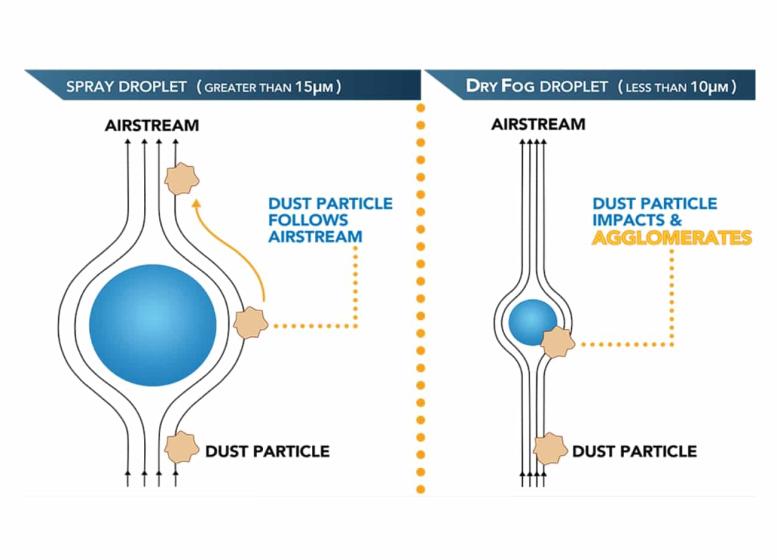
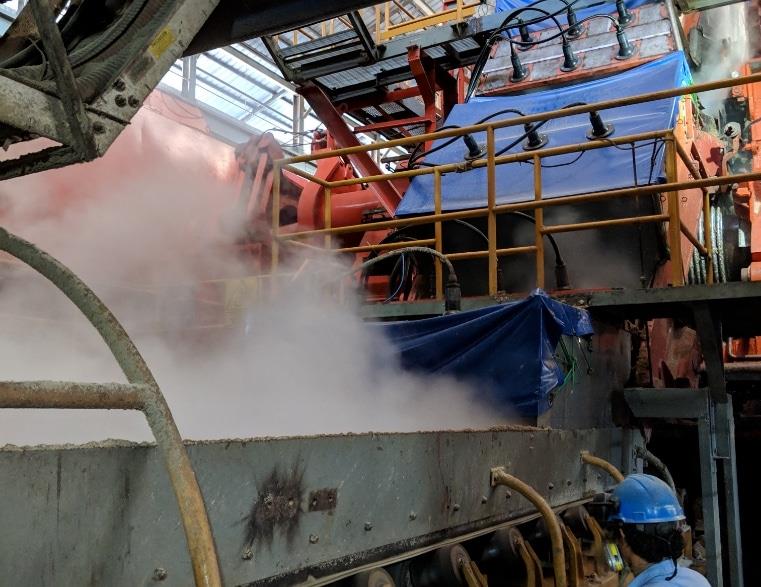
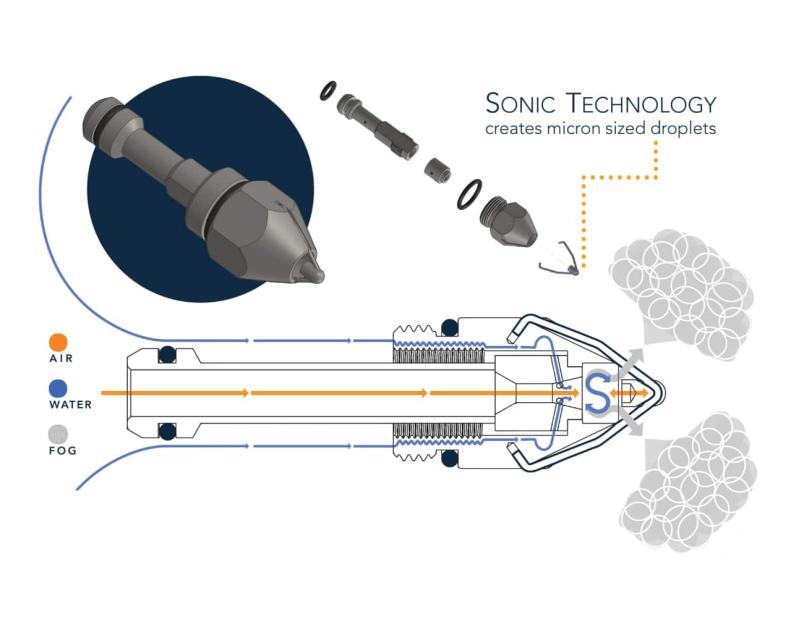
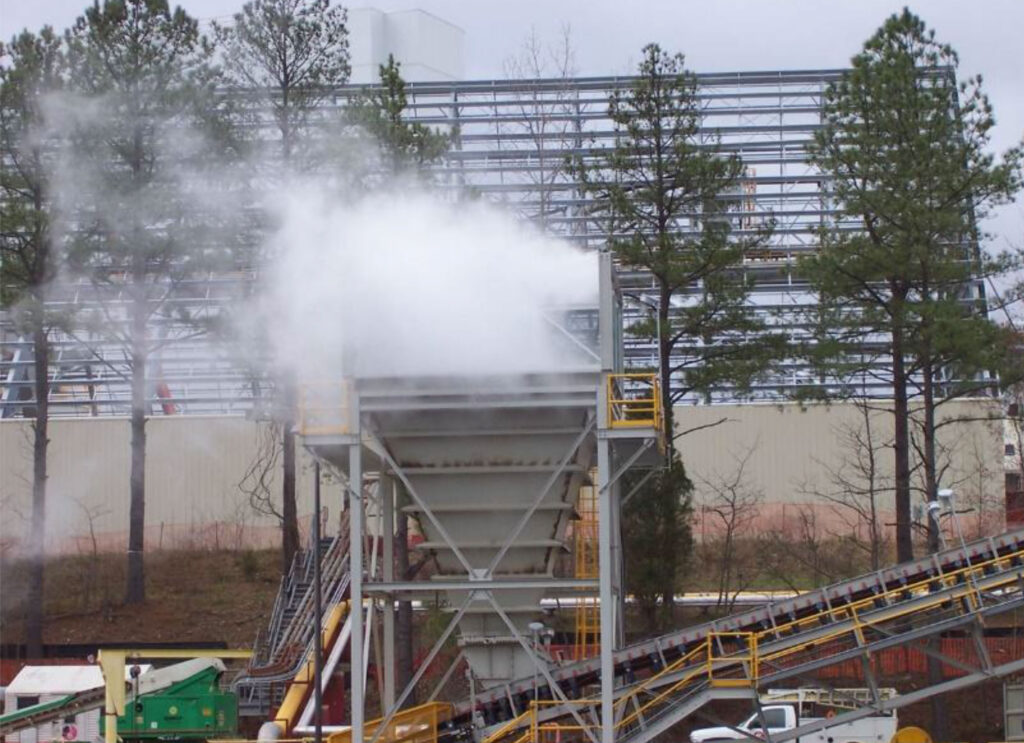
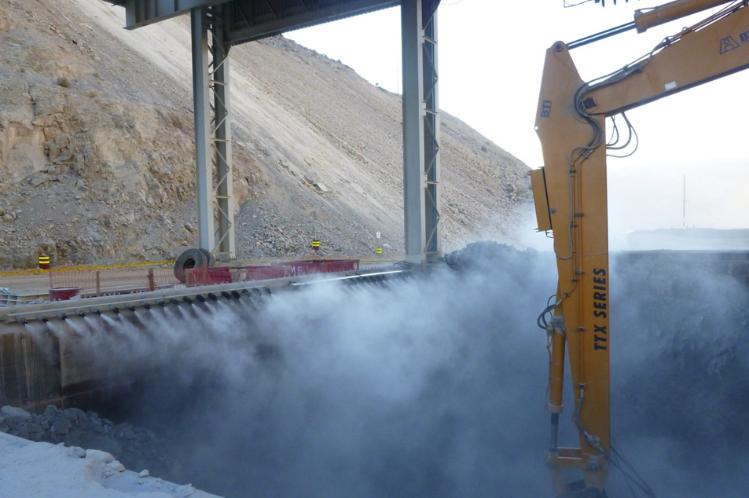
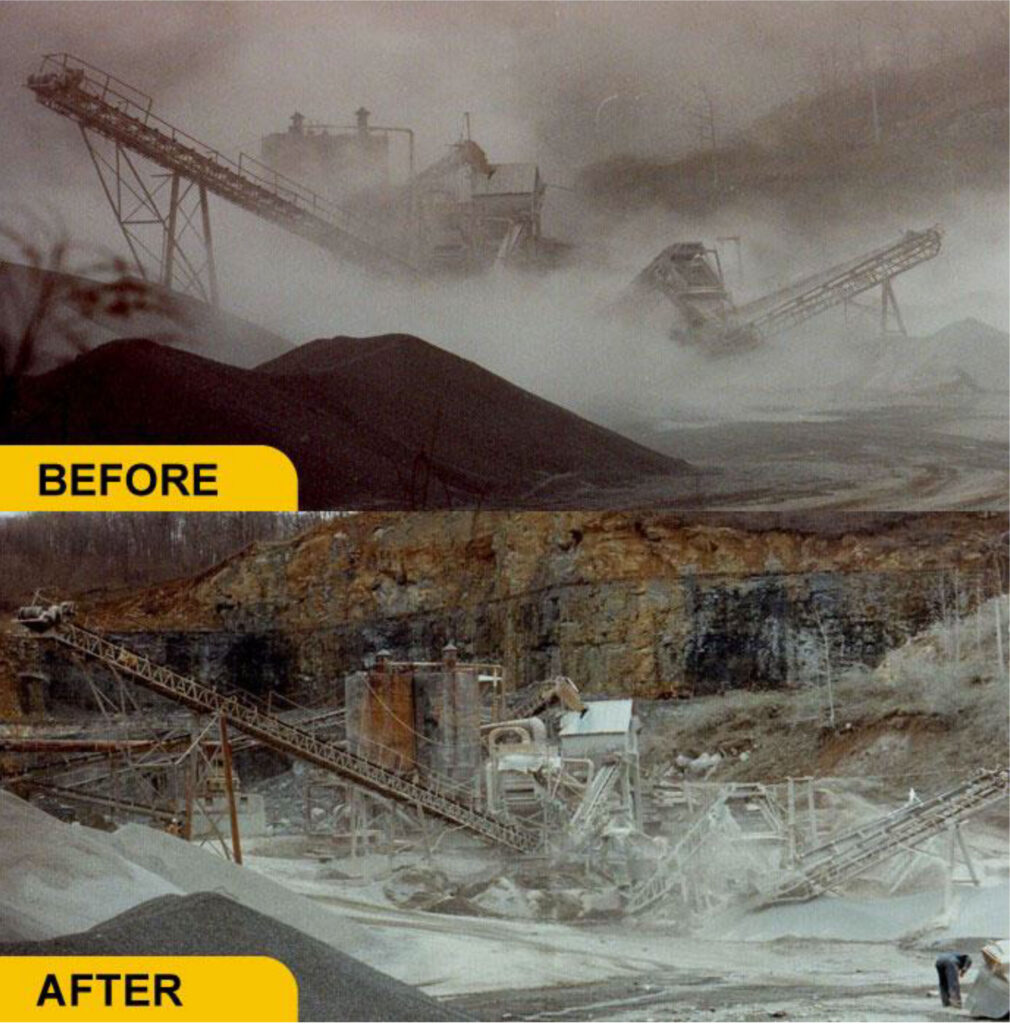
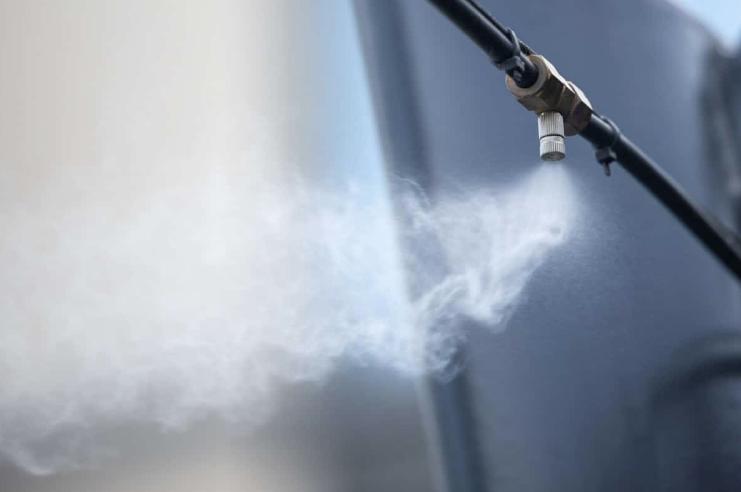
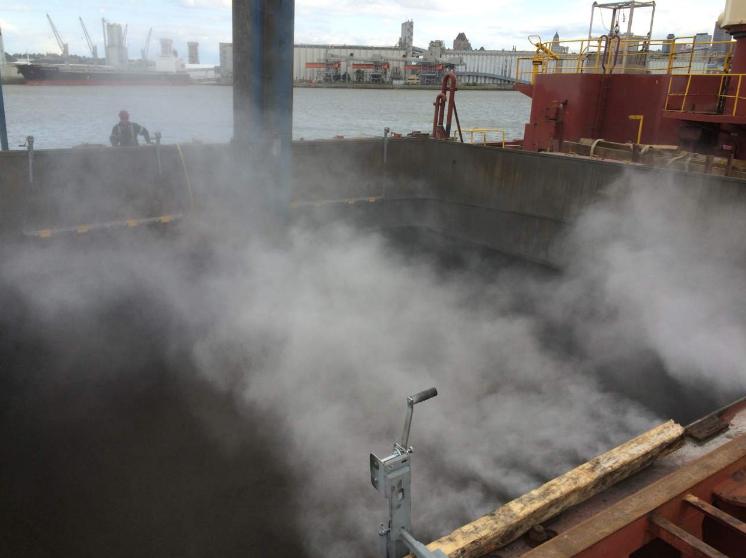
DRY FOG SYSTEMS Envirovent Dry Fog Systems utilise specially designed air-atomising nozzles to generate ultra-fine water droplets, typically 10 microns or smaller. These ultra-fine droplets effectively collide with and capture airborne dust particles while introducing less than 0.1% additional moisture to the process material.
Each system is custom engineered to provide effective dust suppression at material handling transfer points, reducing fugitive dust emissions while maintaining process efficiency.
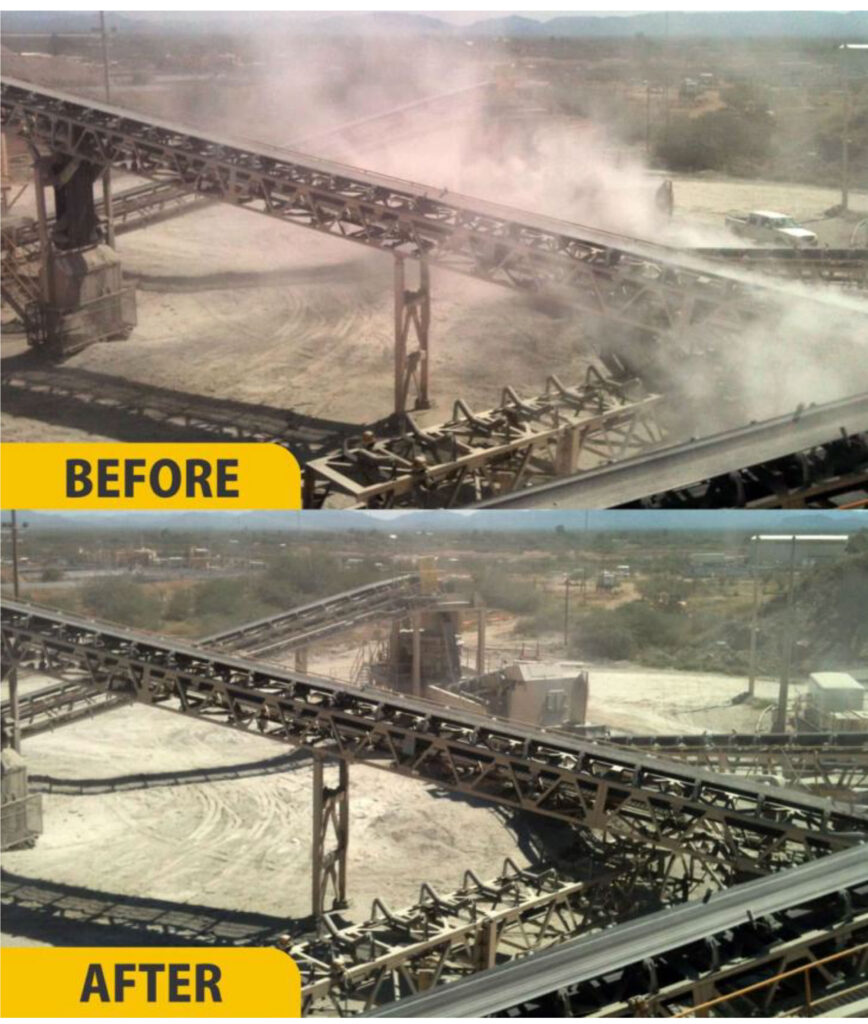
OPERATING PRINCIPLE Dry Fog Systems operate by atomising compressed air and water to produce ultra-fine droplets of similar size to airborne dust particles. When droplets and dust particles collide, they agglomerate into larger, heavier particles that are no longer able to remain suspended in the air and settle back into the material stream under gravity.
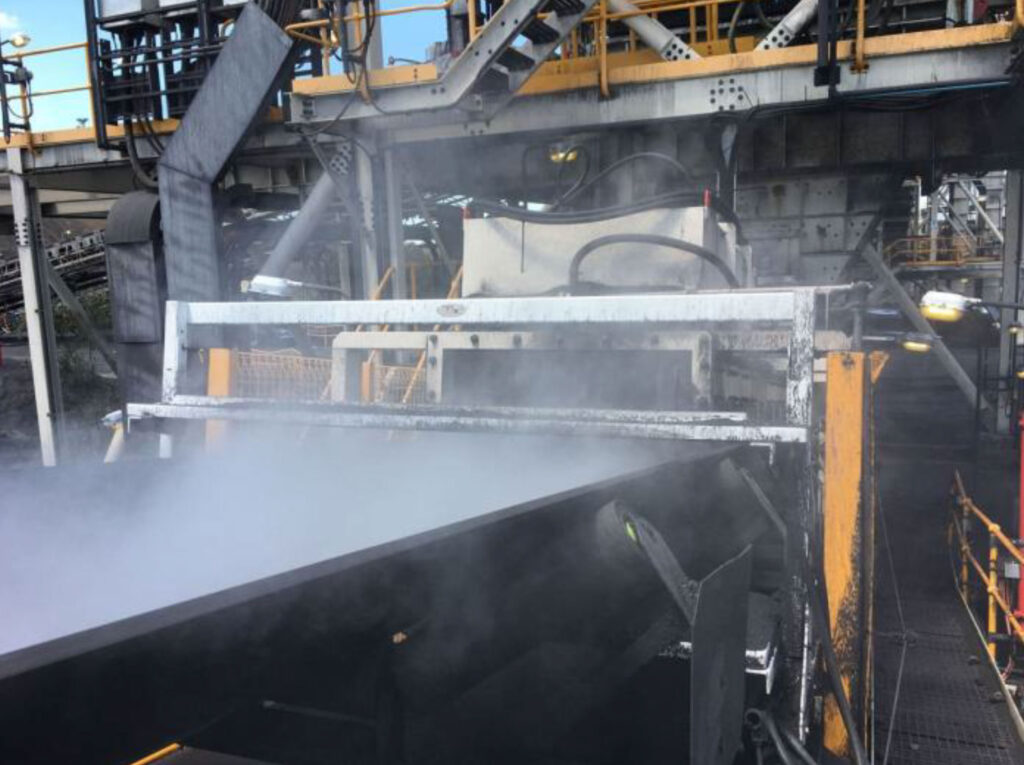
At the dust generation source, millions of ultra-fine droplets create a fog curtain that captures airborne dust before it can disperse into the surrounding environment. For optimum performance, Dry Fog Systems are most effective in enclosed or contained applications.
DRY FOG PRODUCTS Envirovent Dry Fog Systems are supplied as complete, modular packages engineered for each application and designed for reliable dust suppression with simplified installation and maintenance.
Each factory-assembled system comprises electrical controls, instrumentation, flow regulation, air and water distribution manifolds, nozzle assemblies and support structures, with optional air compressors, receiver tanks, pumps and self-cleaning secondary filtration units.
ADVANTAGES Dry Fog technology provides highly effective dust suppression while introducing minimal moisture to the process material. The systems operate with very low water consumption, are simple to install and maintain, and have low operating costs compared with conventional ventilation or chemical dust suppression systems.
KEY BENEFITS ✓ Less than 0.1% added moisture ✓ Low water consumption ✓ Suitable for indoor and outdoor applications ✓ Simple installation and integration ✓ Low operating costs ✓ Engineered to suit your application
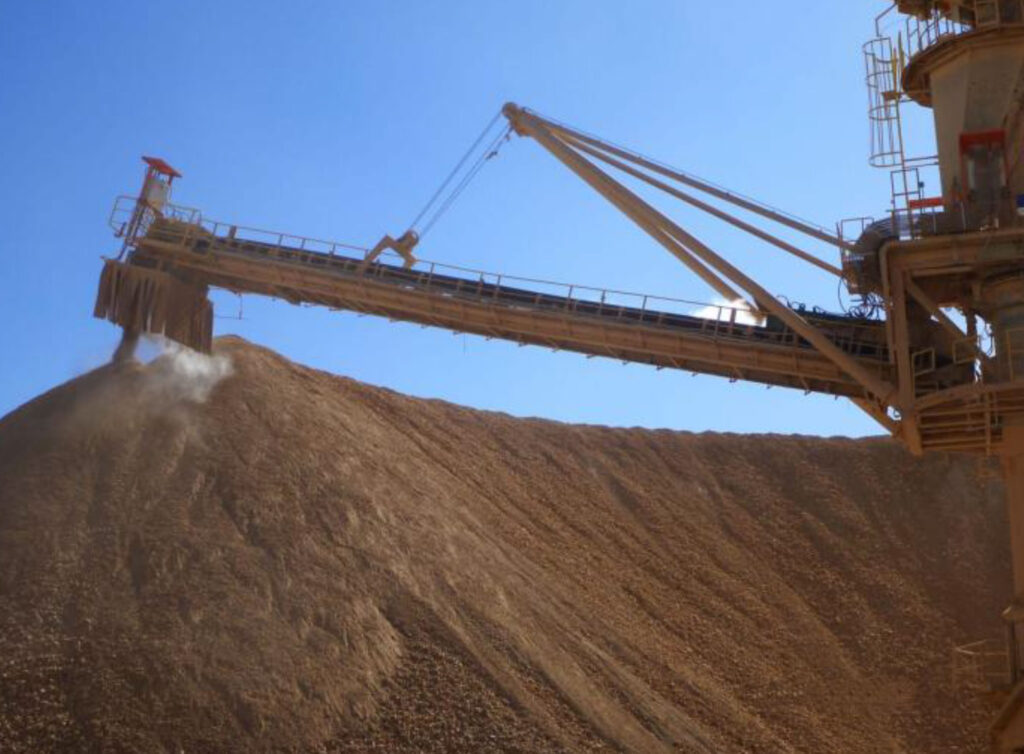
APPLICATIONS Envirovent Dry Fog Systems are suitable for a wide range of bulk material handling applications, including conveyor transfer points, crushing and screening plants, reclaimers, stackers, tipplers, truck loading and unloading stations, rail loading facilities and ship loading systems.
Suitable for both indoor and outdoor installations, systems can be supplied with freeze protection for operation in ambient temperatures as low as -60°C.
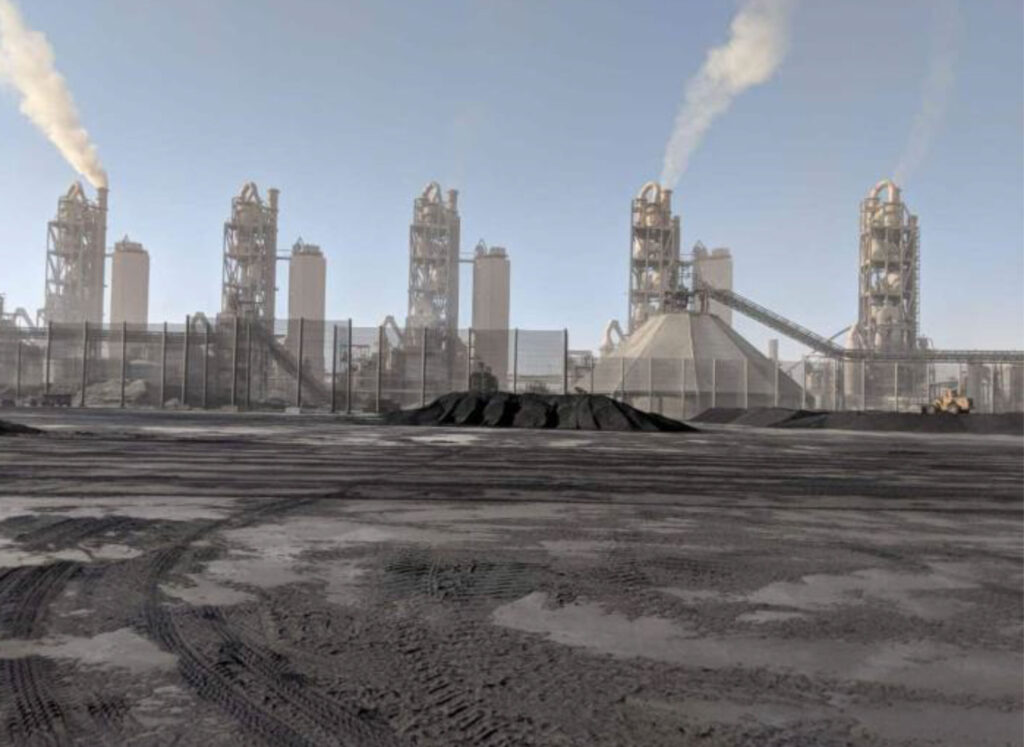
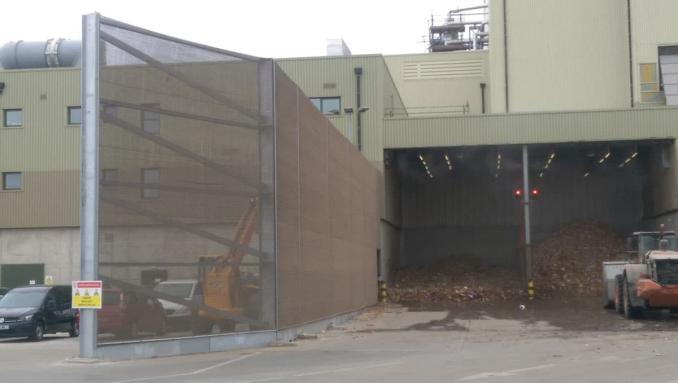
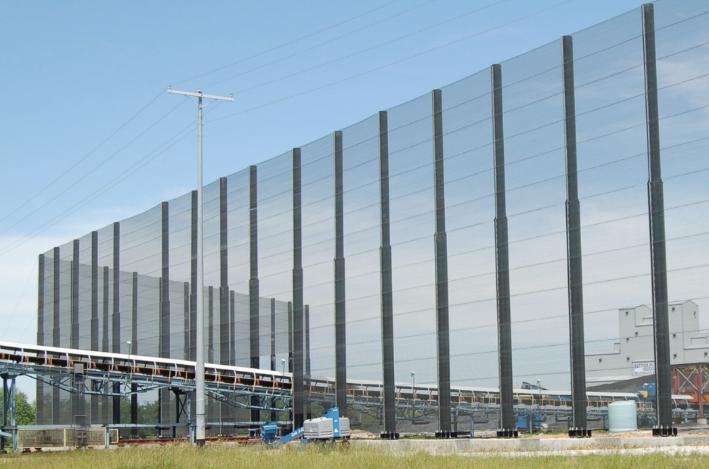
DUSTTAMER™ WIND FENCE SYSTEMS Wind erosion is one of the primary causes of fugitive dust emissions from exposed storage piles. Reducing wind velocity over exposed material significantly reduces the amount of dust that becomes airborne. DustTamer™ Wind Fence Systems are designed to reduce wind velocities by up to 75% within the sheltered area, helping prevent dust generated by wind erosion, material loading and unloading, and vehicle movement from becoming airborne.
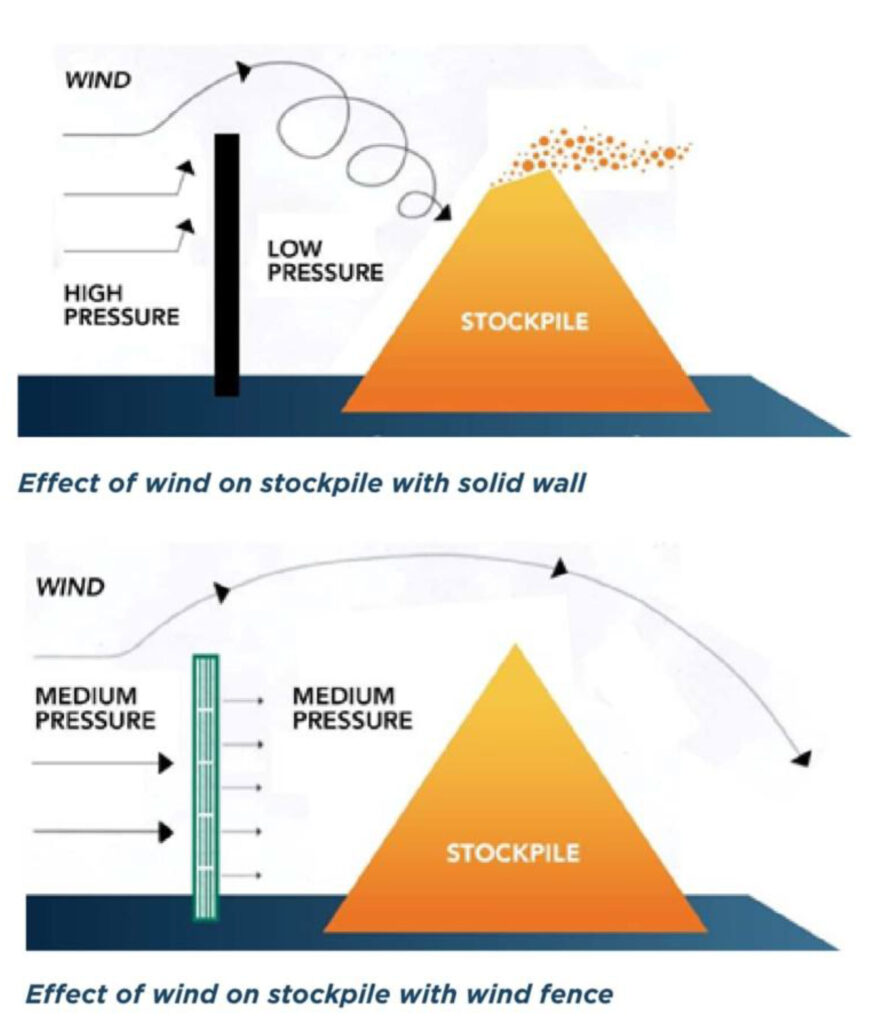
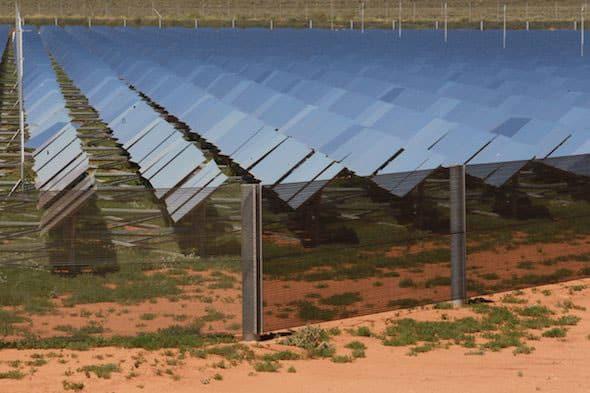
DUSTTAMER™ WIND FENCE THEORY Wind fences reduce wind-induced dust emissions by lowering wind velocity across the protected area. Unlike a solid wall, the porous design allows a controlled amount of air to pass through the fence, equalising pressure on both sides and preventing the high turbulence and recirculation associated with solid barriers.
The resulting reduction in wind speed significantly reduces the wind’s ability to entrain and transport dust particles from stockpiles and other exposed material handling areas.
WIND VELOCITY REDUCTION The primary function of a wind fence is to reduce the wind velocity approaching the storage pile and prevent particle uptake in the protected zone. Particle movement can take place in three different ways: rolling, saltation, or suspension. ✓ Rolling (Creep): Large particles roll or slide along the surface under the influence of wind, depending on particle size and wind velocity. ✓ Saltation: Medium-sized particles move in a series of short hops, dislodging additional particles with each impact. ✓ Suspension: Fine particles become fully suspended in the air and may be transported over considerable distances before settling.
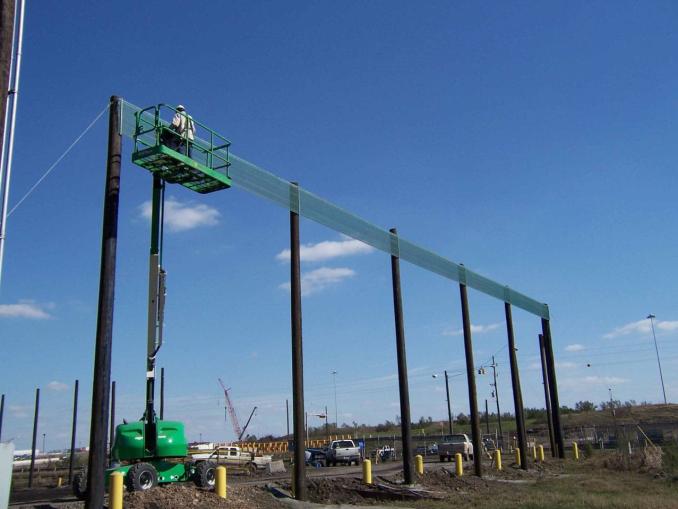
COMPLETE DUSTTAMER™ WIND FENCE SYSTEM We supply all components for your DustTamer™ Wind Fence System: Fabric ✓ UV-resistant industrial woven polyester ✓ Engineered porosity for optimum wind reduction ✓ High tensile strength ✓ Slotted construction to minimise dust build-up ✓ Long service life in harsh environments
Attachment System ✓ Heavy-duty galvanised stand-off brackets ✓ Lockbars for secure fabric retention ✓ Easy installation and tension adjustment ✓ No pre-drilling required
Tie Wraps ✓ UV-resistant nylon ✓ Prevents fabric abrasion ✓ Simple replacement ✓ Long service life
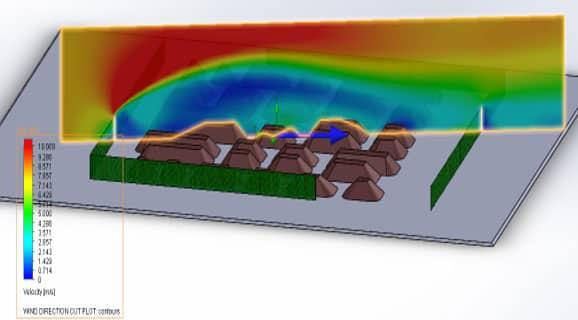
CFD MODELLING FOR WIND FENCE DESIGN AND PLACEMENT Envirovent uses Computational Fluid Dynamics (CFD) to evaluate site-specific wind flow patterns and optimise the design and placement of DustTamer™ Wind Fence Systems. CFD analysis enables us to assess wind velocity, pressure distribution, terrain, stockpile geometry and surrounding structures, ensuring each installation delivers optimum wind velocity reduction and fugitive dust control performance.
Every DustTamer™ Wind Fence System is individually engineered to suit site-specific conditions, providing optimum wind velocity reduction, while minimising wind erosion and reducing wind-induced dust emissions.
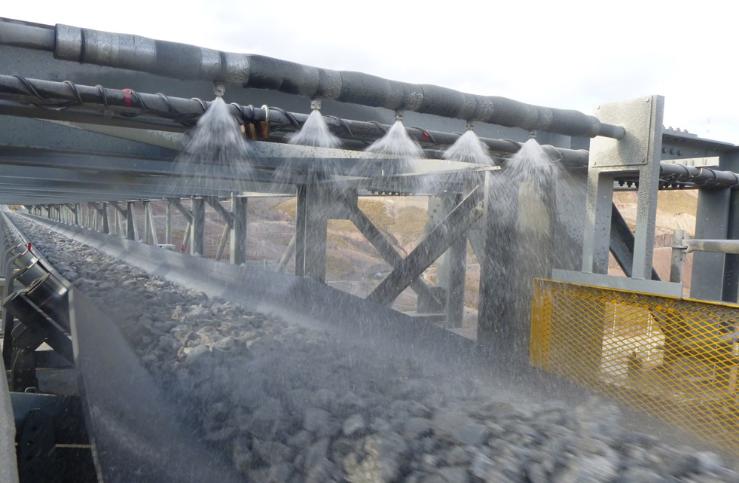
NESCO® WATER SPRAY SYSTEMS NESCO® Water Spray Systems are designed for applications where controlled moisture addition provides the most effective method of dust suppression. High-pressure pumps and engineered spray nozzles deliver a precisely controlled quantity of water to the material stream, ensuring effective dust control while optimising water consumption.
These systems are commonly installed at conveyor transfer points, stockpiles, reclaim systems and material loading facilities where controlled moisture addition is acceptable and provides effective dust suppression. Automatic flow control maintains the correct water-to-material ratio under varying process conditions, ensuring consistent dust suppression and efficient water utilisation.
KEY BENEFITS ✓ Effective airborne and material dust suppression ✓ Controlled moisture addition ✓ Automatic flow regulation ✓ Low operating costs ✓ Suitable for high-capacity material handling ✓ Custom engineered systems
OPERATING PRINCIPLE NESCO® Water Spray Systems suppress dust by producing finely atomised water droplets that collide with airborne dust particles. The droplets agglomerate with the dust, forming larger, heavier agglomerates that settle back into the material stream before becoming airborne.
Unlike Dry Fog Systems, which add minimal moisture, these systems apply controlled moisture directly to the process material, typically between 0.2% and 0.5% by weight, providing effective dust suppression and reducing downstream dust generation.
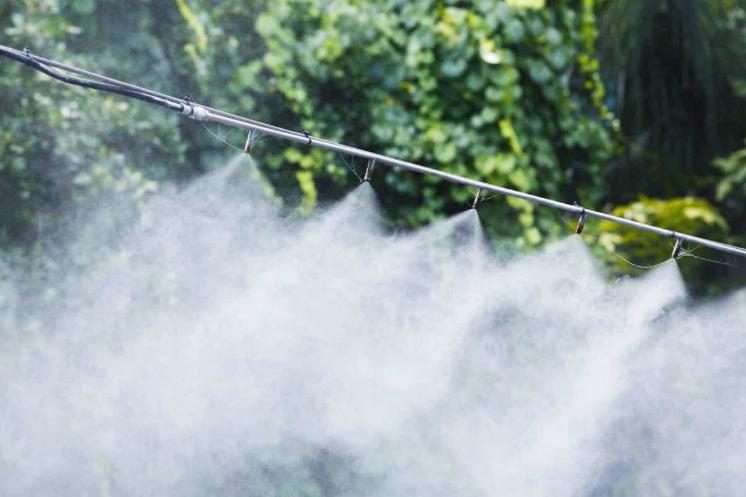
HIGH-PRESSURE FOG SYSTEMS Envirovent High-Pressure Fog Systems utilise high-pressure atomisation to generate fine water droplets that provide effective airborne dust suppression while maintaining low water consumption. System performance depends on droplet size, operating pressure, material characteristics and application of the fog.
High-pressure fog technology provides an efficient, reliable and environmentally responsible solution for controlling airborne dust in industrial and environmental applications while maintaining low water consumption.
OPERATING PRINCIPLE ✓ Fine Water Droplets High-pressure fog systems produce fine water droplets, typically between 10 and 50 microns, providing a large surface area for effective dust capture.
✓ Collision and Agglomeration As the droplets mix with airborne dust particles, they collide and agglomerate to form larger, heavier agglomerates that settle under gravity.
✓ Airborne Dust Capture The fine fog is distributed by natural air movement, allowing the droplets to interact with airborne dust particles over a wide area.
✓ Surface Wetting The additional moisture suppresses dust generation at the source by lightly wetting exposed material surfaces to reduce secondary dust generation.
✓ Environmentally Friendly High-pressure fog systems reduce airborne dust using only water without the need for chemical additives, providing an effective, environmentally friendly dust suppression solution.
KEY BENEFITS ✓ Effective airborne dust suppression ✓ Fine-atomised droplet technology ✓ Suitable for open-area applications ✓ Low water consumption ✓ Environmentally friendly operation ✓ Custom engineered systems
The Right Solution for Your Application Contact our engineering team to discuss an air pollution control solution tailored to your application.